Monday, March 17, 2014

Where Is Self Publishing Heading?

Imagine that you have to decide whether or not to marry a stranger in less than a day. You know where she is from (publishing house), what others say about her (editorial or customer reviews), and you do have the chance to talk to her for a while (sample chapters). Are you ready to marry her, given that you are always free to divorce if things don’t work out (abandoning a book)?

As a self-published writer I know how hard it is to get editorial or customer reviews. Harder than writing the book. But I have to; otherwise why would readers trust me, someone they’ve never heard of, especially when there isn’t a big publishing house to back me up? “A best seller was a book which somehow sold well simply because it was selling well.” (S. Boorstein). More reviews will bring in more readers, who will further write more reviews, good or bad.

Now paid customer reviews are generally considered unethical, but to get editorial reviews, self-published authors do need to spend hundreds of dollars. Even CreateSpace, Amazon’s self-publishing platform, encourages you to purchase those editorial-review packages, each costing $400 or so. To get customer reviews, you go through the list of indie-blog reviewers and beg everyone who accepts your genres to write a review. Normally those bloggers are already bombarded with hundreds of review requests every month and, in the end, you get about a handful of reviews if you are lucky. Authors who could afford it use services like NetGalley to distribute review copies; others simply give away thousands of free copies to readers, hoping that some of them may eventually read and review it. And mind you, those readers typically have dozens if not hundreds of free books already stored in their Kindles. I never liked the idea of distributing free copies on a massive scale like this. Why shouldn’t writers be paid for their work?

That’s why I saw hope when I encountered the pay-per-chapter platform (http://www.novkey.com). This is like dating: you no longer have to make a “life-long” commitment to a stranger. You put in some small investment as you go through each chapter. Whenever you feel this is not for you, you simply move on to another book. Readers don’t have to consider what others say about the book---even if everyone likes a book, it may not suit them.

It seems there have been bad examples regarding similar models years ago, e.g., some author charged unreasonably high prices for the last few chapters (http://www.novelr.com/2009/05/01/why-pay-per-chapter-sucks), but this is easy to fix. We can ask the authors to set the price from the very beginning. And I think most authors would not do that to risk their reputations. Every new business needs regulations, and this is already a popular model in other countries, like China. Even Kindle can adopt this model by instantly examining how far the reader is in a book. We can also collect objective “customer feedback” by knowing how many readers are currently reading a book, and how many chapters they’ve finished. These are technically realizable.

In summary, I believe that authors deserve to be paid. Amazon’s free promotions are doing no good to the health of the publishing world, be it Indie or Traditional. Nor is their Kindle Countdown Deals (http://fionarawsontile.blogspot.com/2013/12/truth-about-kindle-countdown-deal.html). It’s time for a change.

Friday, January 24, 2014

Shut Up, and Write


No, you don’t have to shut up or stop whatever you are doing, unless you want to be a serious writer. Writing is an innately contradictory business. I know it doesn’t look nice if we shut ourselves from the rest of the world for months or years. Unfortunately, that’s usually how great things are done. But that doesn’t mean we stay as a loner. Once our work is published, we share our most intimate feelings with strangers we never know existed, and subject our souls to their worship or contempt.
If you don’t believe me, a self-published author, here are quotes from well established authors.

Writing is a solitary occupation. Family, friends, and society are the natural enemies of the writer. He must be alone, uninterrupted, and slightly savage if he is to sustain and complete an undertaking. ~ Jessamyn West
Imaginative writing has always been a solitary and indeed a somewhat antisocial activity. Apprenticeship existed, no doubt, but it was an apprenticeship to books and not to living masters of the craft. ~ Madison Smartt Bell

Now with all the convenience and distractions brought to us by the Internet, socialization can be a quick and yet satisfactory act, or it can be time consuming, depending on how you treat it. It’s only beneficial to our mental health to stay connected with friends or strangers, and we all have things to say and opinions to ask for. Meanwhile, do remember that you do these things for the sake of your mental health, not for writing. I frequently hear writers saying how much she/he has learned about writing from a writer’s forum/community. The truth is, he/she would’ve learned more if the same amount of time had been spent in writing the current or next book.
To me, an online critique group is best for work that is far from publishable---for easily noticeable issues such as too much info dumping in the first chapter, dialogue rambling on and on, frequent changes of POVs (unless that’s intended, which is rarely the case). Once it’s past this stage, I don’t know how we could possibly judge a portion of work without knowing the whole picture. After all, every writer would write the same story differently, and something that reads meaningless now may proof its necessity fifty pages later. Needless to say, you may get completely opposite opinions. The best scenario is that you post something and everybody says good; your ego is boosted and you feel more confident continuing your work. You don’t learn anything but … good, if this is what you need.
If you can’t decide whether or not to join a community, take a look at its members. How well are they accomplished? Business people know this rule: we tend to develop into the same type of people we hang out with. Books are written, not spoken of. Many writers have a rule of not talking about their work-in-progress. It’s not because they are afraid that others may steal their ideas (note: ideas don’t matter; there is no such genius idea with which a mediocre writer fails to write a mediocre book). To them, talking about work-in-progress breaks the “magic”.
If your work is self published, you do all the marking yourself, which takes away a lot of time. That’s what you have to do, but be aware of the amount of time and money you spend as well as the payback of each method. The best marketing tool is to write your next book, and write better. When a new book is launched, both the title and the author receive maximum attention. Every custom review posted for a book will affect people’s opinion toward the author and his/her other books.
We often say, it’s hard to make a living as a writer. Maybe the truth is we aren’t that productive yet. I’ll give an example of what I mean by being productive. “Ni Kuang (born May 30, 1935) is a Hong Kong-based Chinese novelist and screenwriter, with more than 300 published wuxia and science fiction novels and more than 400 film scripts.”  (http://en.wikipedia.org/wiki/Ni_Kuang)
Some people say he can write up to 10,000 words a day. I can’t say all of his works are great, but I read some and am a big fan. Alternatively, he could have spent his time on forums or Twitter or Facebook. If you are as productive as he is, you will be able to make a living, be it self-published or not.

Therefore, it’s time for me to shut up and … write!

Friday, December 27, 2013

Excerpt

    A group of ships were flying in outer space, a place where sound made no sense and speed was difficult to judge. Inside the bridge of a destroyer escort, Sterling Presley was sitting in front of a computer. Despite the military-cut brown hair, he resembled nothing of a stereotypical soldier. His slim figure could be a little stronger. The brown eyes were too calm and solitary to hold patriotism. His skin wasn’t rough enough to match the cruelty of war. If he weren’t wearing a uniform, he would have looked like a junior college professor.
    Weird … He confirmed his suspicion and closed the image on the computer. The recent Battle of the Stony Band was considered a victory, their first victory since the war spread to this system eight years ago, but something about that battle wasn’t right.
    He picked up a phone from the table and said a few words. A moment later an officer appeared at the door. “Sir?”
    “Get ready for unloading at Turning Point Station.” Sterling left his desk and stopped in front of a window. Nothing existed outside, except lights from distant stars. The small planet RA-5 was not distinguishable yet from its background.
     “Unloading?” The officer hesitated. “Sir, I thought we were heading to the fortress.”
    “We are, but …” Sterling wasn’t sure how to explain it. To him, logic and reasoning were most meaningful when one studied a case de facto; at the front, everything should yield to intuitions. Or, things that appeared like intuitions but were outcomes of one’s subconscious logic and reasoning.
      “Just do what I said.” 


Thursday, December 26, 2013

Book Review: Medieval Swordsmanship – Illustrated Methods and Techniques


Rating: 5/5 stars
I don’t usually read about martial arts except when I need to do research for my novels. The only other work I’ve read on a similar topic was a book about boxing, which contained about 10% of the information you can find here. To me, this book is amazing. It’s not something you can learn by going to a school for a training class. It requires studying tons of historical records, pretty much anything that’s remotely related to Medieval swordfights, because, unlike Asian martial-art experts, Medieval fighters did not have the habit or discipline to create detailed documentation. A good comprehension of the social background is also critical for the study.

The illustrations are very clear. Sometimes for a basic posture more than one figure are presented from different angles. Even a layman like me found no problem understanding the principles. The writing is also very good, unlike those scientific papers that merely present facts in a boring way. Font sizes, layouts, everything is reader friendly. This is a classic and I’d like to thank the author for taking all the efforts to do this!


Monday, December 23, 2013

Truth about the Kindle Countdown Deals

Since Amazon launched the new Kindle Countdown Deals for KDP Select members in late October, indie authors seem to have various degrees of success. Some sold an astronomical number, some none. Below is what I’ve figured out about this program based on recent experience.

If you go to the Kindle Countdown Deals page, you’ll see somewhere around 2,800 titles. And if you choose, for example, the Science Fiction & Fantasy Category, there are 377 titles for the moment arranged on 24 pages. Pay specific attention to the “Sort by” option. Although you can choose different sorting algorithms, readers normally go with the default, with is “New and Popular”. I don’t have the exact formula, but I’ve heard that the popularity of a book is not determined by the current rank, but by the amount of books sold in the past 30 days, with a weighing factor of the book’s price.

I’m not saying that visibility determines everything, but if a book is listed on the 5th page, there is no way you can go to that page directly without browsing through the previous pages (you can jump to the second or the third). A title listed on the first page can have 10 times more sales than a title listed on the second page, and who would bother to explore the later pages except the author himself? However---I could be wrong, but I’m pretty sure this is what happens---the rank of a book on this list is determined (and remains fixed!) by the popularity before the book enters the Countdown. Let me give you an example.

I first ran a Countdown with my science fiction, The Starlight Fortress, during the week of Nov 3. Since the book was selling very well in October, it appeared on the second page of the Sci-fi & fantasy category, even though there were 34 pages at that time, and stayed there for the entire week. Consequently, I sold 26 copies of the book with only 6 customer reviews and no extra promotions. Yesterday I started my second Countdown. Because I only sold two copies in the past 30 days, my book appeared on the 5th page. Although I have other paid promotions yesterday and today, and have already sold 11 copies by far, the book keeps falling in the Sci-fi & fantasy list, making room for new entries that have much lower ranks but were presumably selling better before they entered. There are still several days to go, but I can predict that once the effects of my paid promotions fade away, the Countdown won’t work alone.

So, here is the logic. Let’s say we have Book A, which hasn’t been selling well at a regular price; after it entered the Countdown, for some reason, it is doing well. Then here comes Book B, which has been selling but is currently ranked lower than A. Amazon does not want to put B after A, because B is considered a more promising title. In other words, A has already been deemed as an inferior title at the time it entered, and they do not want the performance of the Countdown to affect the performance of the Countdown (is this clear?). We have to admit that doing so will likely maximize Amazon’s profits. After all, it’s an online retailer, not an author-nurture program.


In summary, if your book hasn’t been doing well on a regular basis, you shouldn’t expect too much with the Countdown, unless you pair it with other promotions.

Thursday, December 19, 2013

On Rewriting


What is the so-called voice? The one thing that easily distinguishes a writer and makes him memorable, the one thing itself being so difficult to define and comprehend. Most writers believe they cannot teach how to find or create a unique voice, but one should be able to find his voice through writing constantly and writing well. According to my experience, voice shows up most frequently during rewriting. This is because, in the first draft, we are too engaged in developing the story and the characters, too eager to deliver our messages, too awed by all the possibilities, or too desperate to put something on a blank page.

This is why a good writer may not be a good speaker (most writers are actually shy and nervous when speaking to the public). Speech is improvisatory and requires different skills. To me, writing is not a linear process; it has both feedforward and feedback stages. Sometimes I’m unable to write a sentence without knowing how to write the following chapters. Same thing with dialogue. Now it is commonly accepted that good dialogue should both characterize the speaker and advance the plot. If it fails to characterize, it is “info dumping”. If it doesn’t advance the plot, well, let’s just say there are better ways to do it. However, more than often, it is difficult to achieve both goals in the first draft.

Never fall in love with our first drafts. We may have rehearsed some of the sentences so many times that they have become reality to us, but keep this in mind: few people prefer reading accounts of reality to fiction. Even for historical books that are supposed to accurately relate the past, great efforts have been made in searching the right way to present it. Reality doesn’t need to make sense; fiction does. Things cannot happen out of the blue in a novel, although that’s how things happen in real life. We need to put foreshadow earlier on. Readers need to build expectations, so that they can be either satisfied or misled. That’s what keeps them reading. Sometimes we plant those seeds subconsciously without knowing their purposes until a hundred pages later; sometimes we do need to go back and forth to add them in. There should be no irrelevant information in the dialogue, no random person being paid much attention. These are all to be fixed through rewriting.

Note that I didn’t say revising. I meant rewriting, which includes, but is not limited to, reevaluating the theme and its realization, reconstructing the whole narration, combining or deleting characters. It sometimes means throwing away hundreds of pages. I once read about a writer who would finish the first draft and toss it completely before beginning the rewriting. Many of us don’t have the courage!

I can only imagine how many potential masterpieces have been abandoned in the beginning because the (novice) writer felt he/she wrote something crappy and meaningless. Experienced writers know that a first draft is allowed to be crappy, and it may appear meaningless before going through the nonlinear process I mentioned above. Experienced writers are even happy with a crappy first draft, knowing that this will only add to the pleasure later on when they turn it into a shining piece. In fact, if you happen to write a brilliant first chapter the first time, it can be a bad thing, because in the following chapters you might try too hard to live up to the standard you’ve just set for yourself, or you might be too afraid to explore all the possibilities just to keep the beginning.

Once we are satisfied with the rewrite, we can start revising it. I would suggest refraining from fiddling with it too many times, because doing so may hurt the voice. Once there was a writer who posted a paragraph on a forum, and other writers tried to help him polish it. After a few posts I said, keep your original. It reads like a stranger breaking into your house with a dead wolf on his back, while the revisions are like salesmen gently knocking on the door (unfortunately he didn’t get my metaphor). Writing is not to find the best word from a thesaurus, or to construct the perfect grammar. A language can be bent to the extend that a little more pressure may have it crushed. Someone said, art is to know what to keep and what to delete. We can add, it is also to know when to stop.

Friday, November 22, 2013

Fiction Writing Tip - Collaborate with Your Villains


If you are stuck in the middle of a manuscript, uncertain where to go next, before you call it a Writer’s Block --- by the way, many writers do not believe there is such a thing --- then it’s time to seek help from your villain. First, you do have a villain, right? It doesn’t need to be a bad person. He just needs to have some *irreconcilable* conflict with your protagonist. It doesn’t even need to be a person. It can be an animal (like a monster), the weather, the society, anything, but it’s most helpful when it’s a person, because humans are the most creative beings, right?

Just think about your villain for a moment. What is he doing now? Is he happy? Most likely not, because your protagonist is somehow in his way. What is he going to do to kill/defeat/deceive your protagonist in order to achieve his goal? If his *biggest* goal has nothing to do with your protagonist, then he’s no longer qualified for a role in the book.


Always keep your villain in your mind, whether your protagonist is celebrating, idling, or talking to others. You don’t need to bring your villain up, but by simply remembering his existence, what you write will read differently. Writing is a subtle thing, in which our subconscious does a lot of work for us, and usually the greatest. A description of your protagonist’s mundane dinner at home will have an ominous atmosphere, if you, the author, know what the villain is up to hundreds of miles away. Try it, and see if it works!

Wednesday, November 20, 2013

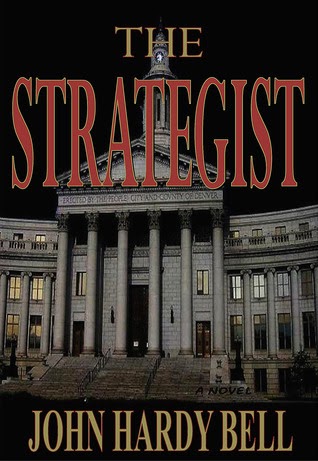
Book Review - The Strategist (Author: John Hardy Bell)


Rating: 5/5 stars


As a debut, the book is surprisingly well written. It’s not a CSI-typed story trying to dig up the truth. It’s more about fighting the wealthy and powerful who are able to corrupt any aspect of our public and personal life.

My only complaint is that sometimes there are excessive dialogue exchanges, especially in the first eight chapters before crises and actions take place. After that, I could not put it down. The characters are very realistic. The rascal cop who “intimidates people simply by the way he wears his badge”, the woman politician who answers every question by not answering the question … I especially like the way the devils are brought down - not by justice, but by the selfishness of their own people. That’s the sad reality!

I hope the author will keep producing good work like this!

Friday, November 15, 2013

Sophistication in Fictional Writing


One of the most useful tips I learned in creative writing was from the book, Self Editing for Fiction Writers, by Renni Browne and Dave King (their chapter 11). Basically, if you want to deliver a message, describe a feeling, or characterize a trait, doing it once is enough. Why is it so bad to be repetitive? Because after you've told your readers the first time, they know it. Why would they want to spend time on something they’ve already known?

I’ve seen great descriptions, witty dialogue, dramatic conflicts done by novice writers, but the lack of sophistication is a common flaw. When we write, we need to trust our readers. Trust their intelligence. The modern readers have seen everything. If you plant a foreshadow earlier on, they’ll know what to look for later. Be subtle. Be implicit. If you underestimate your readers, if you think you are the only one who could come up with such a complicated plot, you’re not respecting your readers, and they’ll know it.

A related issue is over-characterization. For example, if you want to describe a character as a baseball fan, simply showing him wearing a shirt of his favorite team is enough. Do not make him talk about the games all the time as if he knew nothing else, or he’ll end up as a cartoon character. “Characterization is an accident that flows out of action and dialogue.” (Jack Woodford) Be subtle. In addition, people often deny some of their personalities (such as men who love fancy clothes). Have the character say something untrue, and have his actions betray him. Make the readers feel that they know more than the character knows himself. Offer them clues, enough, not excessive. If they feel “good” reading your book, they’ll come back for the next.


Thursday, November 14, 2013

The Starlight Fortress - Portland Book Review


Rating: 4 out of 5.

In The Starlight Fortress, young Queen Geneva of the Alliance battles it out with the Imperial Forces while navigating through a life filled with the various suitors and pregnancies. The story opens in the middle of a conflict between the two forces. which represent the forces of good, The Alliance, or democracy, represents the forces of good and the Empires represents the evil totalitarian state. Geneva, although a queen, has limited power--her state is more a republic than monarchy. The backstory emerges gradually. Geneva and her allies and enemies are descendants of humans who destroyed the Earth, scattered throughout the universe and have been engaged in various battles since. Geneva leads the “good guys” and the mysterious Pompeii the “bad guys,” or the Empire. In addition to the various aggravations that the tirelessly diplomatic and compulsive eater Geneva has to deal with is “A Second Chance,” an environmental group intent on limiting the RA’s abilities to destroy another planet or planets. Geneva remains a skilled and brave soldier throughout, working with the various forces to broker peace.

The novel is well-written. The author has a skillful style and knows how to build scenes and conflicts. Her characters are also three-dimensional, not cartoons representing good and evil. The plot, although well-worn, takes on some variation in its conflicts, and a powerful statement about peace is made. However, one area of concern is how busy and complicated the plot becomes. It is very hard to keep track of all of the characters, their interests and cultures and the conflicts involved. I was well into the first quarter of the novel before sorting out the major RA-Empire conflict. This may be endemic to the genre, however when a reader opens a fantasy novel, she enters a new culture that she must acclimate to--even though its inhabitants also go on shopping trips and celebrate Christmas.